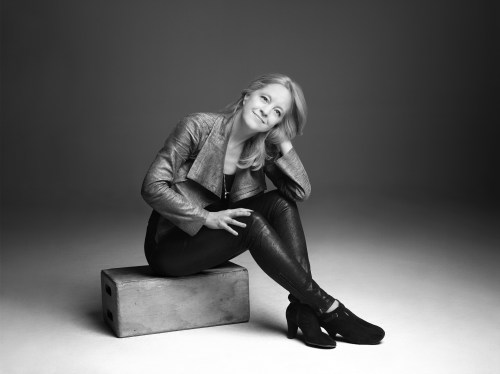
“If everybody gets used to getting their music for free, nobody is going to pay for music anymore,” says the Grammy-winning bandleader Maria Schneider. She is hopping mad at YouTube and Spotify, and she wants you to be hopping mad, too.
Schneider describes the current system of digital music distribution as one in which huge corporate behemoths reap billions in revenue, while leaving a few crumbs – tiny fractions of a penny per play – for the creators, and then lie about what a great public service they’re performing. “It’s been nothing less than a massive redistribution of wealth,” she told me in my recent cover story on Ms. Schneider for DownBeat. Everybody who makes music or listens to it – that’s all of us – need to hear what she has to say, then get involved to force Congress to change the Copyright Law – or else musicians won’t be able to survive. That’s the subject of the first half of the interview. In the second half, we talk about her sublime music and her muse.
If you’re free on Sunday afternoon, 2/5/17, join me for a look back at The Great Jazz Singers (Part 1) – From Satchmo to Lady Day. I’ll be speaking – and playing killer film clips – at the Freeport Memorial Library on Merrick Road at 2:30 pm, and it’s free.
Trio da Paz – Romero Lubambo, Nilson Matta and Duduka Da Fonseca – are celebrating 30 years as the best known trio in Brazilian jazz with the group’s first Grammy nomination, for their album “30.” Here’s my interview with them in DownBeat.
…but, rather, here are my favorite albums of 2016. Why the distinction? I think it’s silly and self-aggrandizing for anyone, however expert their ears, to say “These are the 10 best albums of the year.” I get that people, myself included, have an insatiable appetite to rank things, perhaps to make the world seem a little more orderly. But music is not science. Its virtues resist quantification.
Many 10-best lists seem to me primarily driven by critical notions of what sounds the most innovative, hence the usual bias toward the avant-garde. That’s fine. But I feel that jazz (and music in general) is not primarily about innovation or progress. It should appeal to the heart as well as the head.
I do prize originality and think jazz should sound new and of its time. But that newness is all about individuality, not some intellectual conceit of progress. A great album or song should sound like the honest expression of no one but this artist. There’s another practical reason I don’t call these “the best” albums: there are many hundreds of jazz and jazz-related CDs issued every year. Nobody can listen to everything, and I don’t pretend to have heard them all.
The list that follows is an expanded version of the one I supplied to The 2016 NPR Music Jazz Critics Poll. The NPR poll showed, by the way, that there is essentially no critical consensus on what the year’s “best” albums were. The album that came in first place, Henry Threadgill’s Old Locks and Irregular Verbs, received a mere 41 votes out of the 137 critics and journalists polled.
Here are my favorites, the albums I heard this year that moved me on a personal, emotional and intellectual level. Maybe they will move you, too.
1. Trio Corrente, Vol. 3 (Independent release) – Using Brazilian pop and folkloric building blocks, the Sao Paulo-based trio of Fabio Torres (piano), Paulo Paulelli (bass) and Edu Ribeiro (drums) make joyful music of wild originality with jaw-dropping rhythmic precision. They shared a Grammy award in 2014 with clarinetist Paquito D’Rivera for the album Song for Maura. Still they are my candidate for the best band that almost nobody in the U.S. has heard of. (In the U.S. you can hear their most recent albums on Spotify.)
2. Peter Bernstein – Let Loose (Smoke Sessions) – A great album by one of my favorite guitarists. With fabulous backing by pianist Gerald Clayton, bassist Doug Weiss, and drummer Bill Stewart, Bernstein is free to “let loose” like a horn player, and, boy, does he.
3. Gregory Porter – Take Me to the Alley (Blue Note) – The burnished baritone returns with a new batch of originals that take his songwriting to a whole new level.
4. Bill Charlap – Notes from New York (Impulse) – The new album from the impeccable pianist is a master class in class. I have given only three albums five stars. This is one of them.
5. Tillery (Rebecca Martin, Becca Stevens, Gretchen Parlato) (Larrecca Music) – Tillery combines the talents of three of today’s most interesting singer-songwriters: Becca Stevens, Rebecca Martin, and Gretchen Parlato. On their debut album, the exquisite songs defy easy categorization; maybe that’s why I like them so much.
6. George Coleman – A Master Speaks (Smoke Sessions) — The 80-year-old tenor saxophonist, a NEA Jazz Master and Miles Davis Quintet alumnus, released his first album as a leader in 20 years with an all-star band – and it’s excellent.
7. Snarky Puppy – Family Dinner, Vol. 2 (Decca-Ground Up Records) The jazz-rock-funk collective from Denton, TX is highly popular, and deservedly so. Led by bassist/arranger Michael League, these guys have big ears for great music from all over the world. Here they are with singer/songwriter Becca Stevens and the Swedish band Väsen, playing a song by Stevens.
8. Cyrille Aimée – Let’s Get Lost (Mack Avenue) – A fabulous performance by the French jazz singer with the unforgettable voice.
9. Fred Hersch – Sunday Night at the Vanguard (Palmetto) – Another brilliant outing by one of the best piano trios in jazz.
10. Jack DeJohnette • Ravi Coltrane • Matthew Garrison — In Movement (ECM)
11. Trio da Paz, 30 (Zoho) – Celebrating its 30th anniversary as a trio, the Brazilian expatriate supergroup of guitarist Romero Lubambo, bassist Nilson Matta and drummer Duduka da Fonseca continues to impress with its unique blend of Brazilian and American jazz.
12. Roberta Piket, One for Marian (Thirteenth Note Records)
13.Catherine Russell – Harlem on My Mind (Jazz Village)
14. David Bowie – Blackstar (Columbia)
15. Caetano Veloso & Gilberto Gil – Dois Amigos (Nonesuch)
My Favorite Reissues or Historical albums:
1) Bill Evans – Some Other Time: The Lost Session from The Black Forest (Resonance Records)
2) The Savory Collection, Vol. 1 (Apple Music)
3) Miles Davis Quintet: Freedom Jazz Dance: The Bootleg Series, Vol. 5 (Columbia/Legacy)
Favorite Vocal Album:
Cyrille Aimée – Let’s Get Lost (Mack Avenue)
Favorite Debut album:
Jacob Collier – In My Room (Membran/Qwest)
Favorite Latin jazz album:
Trio Corrente, Vol. 3. (Independent release)
Honorable mentions: Joey Alexander – Countdown (Motema); Leslie Pintchik – True North (Pinch Hard); Nels Cline, Lovers (Blue Note); Dave Stryker – 8 Track II (Strike Zone);Kenny Barron – Book of Intuition (Verve) ;John Scofield – Country for Old Men (Impulse);Joshua Redman and Brad Mehldau – Nearness (Nonesuch);Ted Nash – Presidential Suite (Motema);Russell Malone, All About Melody (HighNote)
Today’s a good day: I get to interview the marvelous Trio da Paz and (separately) master jazz pianist Kenny Barron. Here’s a clip of them playing together, in a song written by drummer Duduka da Fonseca, “Dona Maria.”
I interviewed the uber-talented Jon Batiste on Dec. 13 for a future profile in DownBeat. Here he is with Stay Human and guests singer Judith Hill and violinist Lee England, Jr. performing a Christmas medley on The Late Show with Stephen Colbert. (Be sure to hang on for his funky take on “God Rest Ye…” at 2:25.)
I chatted with pianist and Late Show with Stephen Colbert musical director Jon Batiste recently about his new Christmas album, which includes the funkiest version of “God Rest Ye Merry Gentlemen” ever. Here are highlights of our conversation from DownBeat.com..
Leslie Pintchik performing at NYC’s Jazz at Kitano, Dec. 1 (Photo: Zachary Pintchik)
I went to see Leslie and her trio (Scott Hardy, bass and Michael Sarin, drums) play last Thursday night at the Kitano Hotel. I was glad I did, as you’ll see in my review in DownBeat.
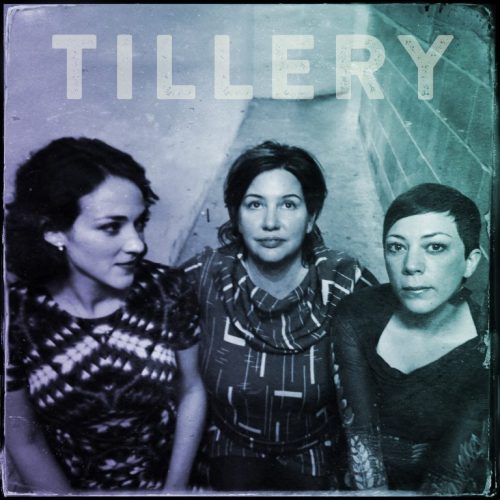
Tillery combines the talents of three of today’s best singer-songwriters: Becca Stevens, Rebecca Martin, and Gretchen Parlato. Their exquisite songs defy easy categorization; maybe that’s why I like them so much. Their first album is one of my favorite recordings of 2016. (You can sample and/or buy it at iTunes by clicking on the album cover above.) Here’s my full review, which appeared in more abbreviated form in the October DownBeat.
Tillery
Larrecca Music 111
★★★★½
The first album by Tillery, the confederation of three of today’s most interesting jazz vocalists – Becca Stevens, Gretchen Parlato and Rebecca Martin, who began singing together in 2010 – is finally here, and it was worth the wait. Although all three possess jazz technique to burn, in Tillery they apply their seamless, sometimes ethereal vocal blend to genre-defying folk/pop songs that cover a range of harmony singing styles, from the traditional (simple and starkly beautiful), to the post-modern (challenging chromatic harmonies and rhythmic effervescence). Throughout this jewel of an album, their music has a raw, wild beauty to it.
It begins with a stunning, alt-folkish version of Prince’s “Take Me With U,” sung in chaste three-part harmony. The effect is like a heavenly choir – the aural equivalent of Botticelli’s “Three Graces” – distilling Prince’s lust-filled R&B anthem into something more innocent, accompanied only by ukulele and guitar. The result is somehow even more compelling for its virginal quality. Two other well-chosen covers are Father John Misty’s “O How I Long To Feel Your Arms Around Me” and The Jacksons’ “Push Me Away.” Throughout, the trio accompany themselves sparely with guitar, ukulele, charango (an Andean mandolin-like instrument) and hand percussion, occasionally augmented by the acoustic bass of Larry Grenadier (Martin’s husband), Pete Rende’s keyboards, and Mark Guiliana’s drums.
Each singer brings some of her best songs to the table. Martin’s haunting “God Is In The Details,” the lyrics of which suggest the interior dialogue of a woman learning to be self-sufficient sans partner, could have been a track on an early Joni Mitchell album. Parlato contributes two fine examples of her precise, fervently hypnotic, rhythmic vocals, “Magnus” and “I Want to Fly So Free.” And there are breathtaking versions of Stevens’ passionate “I Asked” and Martin’s poignant “To Up and Go.” The album ends with Stevens’ gorgeous tour de force, “Tillery,” for which the group is named, an austere meditation on the natural world’s beauty and evanescence (based on a poem by Jane Tyson Clement).
Individually, Stevens, Parlato and Martin are powerful artists with unique visions. Together they have created something transcendental.
Tillery: Take Me With U; O I Long to Feel Your Arms Around Me; No More; Magnus; God Is In The Details; I Want To Fly So Free; Sweetheart; I Asked; To Up And Go; Push Me Away; Tillery
Personnel: Becca Stevens: vocals, guitars, ukulele, charango, hand percussion; Rebecca Martin: vocals, guitar, hand percussion; Gretchen Parlato: vocals, charango, hand percussion; Pete Rende: piano, keyboards; Larry Grenadier, acoustic bass; Mark Guiliana, drums, percussion
Clara Moreno is the daughter of the Bossa Nova stars Joyce Moreno (universally known in Brazil as just Joyce) and bandleader/composer Nelson Angelo. More to the point, she is a terrific samba singer. Her 7th album, Samba Esquema Novo (De Novo) (translation: “New Style Samba—Again”) on the U.K.’s Far Out Records, re-imagines a seminal 1963 album (Samba Esquema Novo) by the influential singer-songwriter Jorge Ben. He’s the guy who wrote the international hit “Mas Que Nada” (see Clara’s version below). If all this sounds a bit esoteric to you, I guarantee the rhythm will get you where you live. Here’s a “Players” profile I did about Clara from the November 2016 issue of DownBeat. You can find the album here.
Deelee Dube, winner of the 2016 Sarah Vaughan International Jazz Singing Competition (photo: Anthony Alvarez)
At last Sunday’s finals of the fifth annual Sarah Vaughan International Jazz Singing Competition the judges awarded London’s Deelee Dubé the grand prize and gave second place to Danish jazz singer Sinne Eeg. I would have reversed that order. My take at JazzTimes.com.
Since my first DownBeat cover story on singer/songwriter Gregory Porter back in August 2013, he’s come in first place in the male vocalist category of both the DownBeat Critics and Readers polls every year, ahead of such heavyweights as Tony Bennett and Kurt Elling.
His new album, Take Me To The Alley (Blue Note),has cemented his reputation in Europe, where he is already a top crossover star and major concert draw. Maybe 2017 will be his breakout year in the U.S. mass market. In honor of his latest win in the DownBeat Readers Poll (December 2016) here’s my second feature article about him from the June issue. In it we talk about his booming career, new album, and how fame has changed his life.
Stride piano master Dick Hyman at Jazz at Lincoln Center, Sept. 22, 2016
How 89-year-old Dick Hyman and 13-year-old Joey Alexander brought the house down at Jazz at Lincoln Center (along with five other brilliant pianists) – here’s my story, as published in DownBeat.com.
Can you call a 13-year-old a piano master? The question came to mind during last weekend’s season opener by Wynton Marsalis and the Jazz at Lincoln Center Orchestra (known more simply as the JLCO). The show, entitled “Handful of Keys: A Century of Jazz Piano,” featured spectacular performances by 89-year-old piano master Dick Hyman and the astonishing Joey Alexander, now barely a teenager. It also included memorable performances by five other exceptionally talented pianists – Helen Sung, Myra Melford, Larry Willis, Isaiah J. Thompson, and the JLCO’s own Dan Nimmer – an embarrassment of riches.
Since the whole glorious history of jazz piano cannot fairly be assayed in a single evening, the concert was more of a grab-bag than a survey. The game plan seems to have been to allow the pianists to play some of their favorite music, with the result roughly representing many of the major styles of jazz piano.
Marsalis and company were celebrating the 29th season of the JLCO, which, since 2004, has performed its ambitious programs in the plush digs of the Rose Theater, part of Jazz at Lincoln Center’s three-venue complex in the Time Warner Center on Columbus Circle. During intermission, the sold-out crowd was invited to toast the anniversary with champagne in the recently renovated Atrium named for Ahmet Ertegun and his wife Mica. The new season will include centennial observances of Dizzy Gillespie, Thelonious Monk, Buddy Rich, and Ella Fitzgerald.
Marsalis kicked off the evening with the Milwaukee-born Nimmer, introducing him as someone who “was born and lives to swing… We have embraced him and love him and we won’t let him go anywhere.” As he entered from stage right, the orchestra echoed those sentiments, greeting the boyish-looking 33-year-old with a standing ovation. Nimmer, choosing the upbeat “Temperance” from a 1960 album by one of his idols, Wynton Kelly, proceeded to emulate what he described as Kelly’s “happy feeling and driving swing.” Accompanied by a sparkling arrangement by JLCO trumpeter Marcus Printup that showcased the piano beautifully, Nimmer showed why he is one of today’s most versatile and under-appreciated pianists. It comes down to two words: great feel.
The next pianist, the preternaturally confident and proficient Isaiah J. Thompson, a Marsalis protégé, is only 19 and a sophomore in Julliard’s jazz studies program. He began with a fine homage to Monk, eloquently riffing on Monk’s off-kilter take on “Lulu’s Back in Town,” artfully arranged by trombonist Vincent Gardner. Afterwards, Marsalis observed, “He’s gonna get a good grade this semester.” On Oscar Peterson’s “Hymn to Freedom” from the 1962 Night Train album, Thompson displayed a light touch and solid swing feeling that conjured the master.
The rising piano star Helen Sung followed, impressing with her physicality and polish at the keyboard and her stylistic range. She brought that whole-body approach to McCoy Tyner’s fascinating, rhythmically challenging “Four By Five,” in her own arrangement for the JLCO. The high-energy arrangement featured Victor Goines burning through an intense, Coltrane-ish tenor solo, and Ali Jackson, having a field day in one of his typically melodic drum solos. After that bracing excursion into modernism, Sung made a 180, with a beautifully nuanced, pleading blues piano solo on Percy Mayfield’s R&B classic “Please Send Me Someone to Love.” Played as a trio with drummer Jackson and bassist Carlos Henriquez, it felt like a warm bath.
NEA Jazz Master Dick Hyman, who must be tired of seeing his age in print, showed his ageless artistry in the first of his two appearances in the program. In a Benny Carter arrangement of “All of Me,” Hyman’s fleet, two-handed runs displayed undiminished skills and imagination. Marsalis and other band members seemed to hang on his every note.
The program’s second half began with the extraordinary Myra Melford, whose radiant, energetic presence and sense of humor belie her serious composing chops and a sheer physical domination of the piano that sometimes recalled Cecil Taylor. Of the seven pianists, Melford was the only one to perform her own composition; it was “The Strawberry,” from her acclaimed Snowy Egret album, in a daring, accomplished big band arrangement by saxophonist Ted Nash. After a gospel/bluesy intro, the piece segued into jaunty, Latin-inspired modernism that recalled Leonard Bernstein’s dance music in West Side Story. She followed up with a rhapsodic rendition of Andrew Hill’s “Images of Time.”
Journeyman pianist Larry Willis was greeted with the orchestra’s second standing ovation, in recognition of his long career as a musician’s musician. He continued the concert’s emphasis on the percussive side of the piano with another Monk tune, “Rhythm-A-Ning,” in a brilliant arrangement by saxophonist Sherman Irby that began with a glorious Ali Jackson drum solo, then showcased a dense, discordant, frenetic Willis solo and a wild trombone solo by Elliot Mason.
The stage was set for the evening’s most highly anticipated performance. Mr. Alexander may be diminutive, but he is like a stealth weapon. Introducing him, Marsalis proclaimed his genius, noting, “You will never hear another 13-year-old ever play on the progression he’s about to play.” The progression was that of “Very Early,” the first of two tunes written by or associated with Bill Evans. The idea that a pianist so young would embody the spirit of the great Evans was hard to wrap one’s head around, but he successfully evoked the master without sacrificing his own keen originality. In this, and a breathtaking version of “Who Can I Turn To?,” here at last was the celebration of elaborate and exquisite jazz harmony needed to round out the evening’s portrait of jazz piano history.
Perhaps the only finale that could credibly follow Alexander’s bravura performance was the return of the serene, Yoda-like Mr. Hyman, striding onstage with erect posture and a vigor that belied his 89 years. He proceeded, Samson-like, to destroy the place with James P. Johnson’s supremely challenging “Jingles.” In the finest rendition of a Johnson stride masterpiece that I ever expect to hear, he also made the 1930 masterwork sound like it had been written yesterday.
Last weekend’s season opener by Wynton Marsalis and the Jazz at Lincoln Center Orchestra, entitled “Handful of Keys: A Century of Jazz Piano,” included
performances by 89-year-old piano master Dick Hyman and the astonishing Joey Alexander. Can you call a 13-year-old a piano master? Joey begs the question. The show featured memorable performances by five other pianists – Helen Sung, Myra Melford, Larry Willis, Dan Nimmer, and Isaiah Thompson. My review soon in DownBeat Magazine (I’ll post a link here).
My DownBeat chat w/Jacob Collier (@JCollierMusic) is out now. Jacob is a musical phenom who sings up to 12-part harmony on his own songs and insane covers of songs like “Fascinating Rhythm” and “Meet The Flintstones.” And he plays every instrument in sight. It wouldn’t matter if he wasn’t a genius arranger – but he is.
Here’s the first playlist of audio and video clips from my recent series of talks on Cunard’s Queen Mary 2 about the history and development of the piano in jazz. This expanded playlist corresponds to my talk, “From Jelly Roll to Nat King Cole,” covering the dawn of jazz, circa 1900, to the birth of the modern jazz piano trio. It includes fascinating and entertaining performances by Jelly Roll Morton, James P. Johnson, Willie “The Lion” Smith, Fats Waller, and so many more. Enjoy, and I welcome your feedback!
Just a note to thank to all my new friends who came to my jazz history lectures on the Queen Mary 2 as part of the 2nd Cunard/Blue Note Jazz at Sea transatlantic crossing this past week (Aug. 1-9), featuring the brilliant Herbie Hancock Quintet! It was such a pleasure to meet so many jazz fans – and maybe to inspire some new ones. I was especially gratified by your enthusiasm and spontaneous applause for the great jazz artists whose music we enjoyed together.
I’ll soon be sharing playlists from my talks, “Jazz Piano – A Brief History” (Parts 1&2) and “The Great Jazz Singers” (Parts 1&2 ) here on my website, so that you can find all those great video and audio clips easily; and I’ll post some recommendations for additional listening.
Please feel free to contact me with your questions and comments. You can always reach me here at my website, follow me on Twitter @amorrison2, and on Facebook at http://fb.me/allenmorrisonjazz. Hope to see you again soon!
This is 21-year-old British singer-songwriter, musical polymath and YouTube sensation Jacob Collier. Yesterday I spoke with him via Skype from London, for an interview to be published in DownBeat Magazine. He was charming and articulate, and offered many insights into his singular musical process. His first album, on Quincy Jones’s Qwest Records, is due out July 1 – and it’s killer.
Appearing with her band before a small but enthusiastic audience in a small club in Pittsburgh, Becca Stevens’s music sometimes sounded the way Appalachian folk songs might if they were given astute, philosophical lyrics suggestive of romantic yearning and nature’s magic, and reharmonized and played by jazz musicians of enormous skill and subtlety. Here’s my review from DownBeat.com on May 27, 2016.
“Mmm-hmm… mmm-hmm…” With that sensuous, murmured affirmation, repeated rhythmically, the singer-songwriter Becca Stevens began her song “I Asked” on May 23 at Pittsburgh’s James Street Gastropub & Speakeasy.
In her strong but vulnerable soprano, she sang: “I asked my love/what do you need/ to make your wild heart/beat,” accompanying herself only on the charango, an Andean 10-string lute, on which she played an intricate, beguiling counter-melody line before the members of her namesake band joined in.
Stevens has performed this song, from her critically acclaimed third album, Perfect Animal (Universal Music Classics), in many contexts over the last couple of years. It has an undeniable emotional urgency and pleasurable tension-and-release, no matter whether she plays it solo or with a large world-percussion ensemble and three back-up singers, as she does on Snarky Puppy’s Family Dinner, Vol. 2. (The remarkable live-in-studio video of the Snarky Puppy version has been viewed nearly 400,000 times on YouTube.)
Stevens played the Pittsburgh gig before a small but enthusiastic audience, with a stripped-down version of her band: Chris Tordini on bass and vocals and Jordan Perlson on drums. (A fourth bandmate, pianist-accordionist-vocalist Liam Robinson, was unavailable that evening.)
In this performance, the music often sounded the way Appalachian folk songs might if they were given astute, philosophical lyrics suggestive of romantic yearning and nature’s magic, and reharmonized and played by jazz musicians of enormous skill and subtlety.
In a former era, Stevens might have been considered a “folkie.” But in the 1960s heyday of folk music, the idea of folk musicians going to a conservatory to study jazz would have been considered pretty far out; times have changed.
The band’s sound is strikingly original and flexible: On their second album, Weightless (Sunnyside), the folk roots are more obvious in the band’s acoustic settings; on Perfect Animal, the sound is just as quirky, but denser and more electric.
Notwithstanding the folk leanings of the band, all three of the musicians present at the Pittsburgh show are in-demand jazz players. In addition to her appearance with Snarky Puppy, Stevens has sung with Billy Childs’ Laura Nyro Reimagined project, pianist-composer Taylor Eigsti, bassist-vocalist Esperanza Spalding, and singers Gretchen Parlato and Rebecca Martin, with whom she formed the group Tillery.
Bassist Tordini, in addition to his longtime collaboration with Stevens, works with drummer/composer Tyshawn Sorey and pianist Matt Mitchell; drummer Perlson has played with pianist Bobby Avey and alto sax master Rudresh Mahanthappa.
There’s an invigorating freshness and idealism in Stevens’ songwriting, in which twisty melodies, bleak and poignant, are illuminated by unexpected chords and shifting meters. Stevens is also one of the most fearlessly innovative writers of choral parts, with frequent use of call-and-response and fugue-like structures.
Her vocal harmonies favor austere 2nds and 4ths, sometimes resolving, sometimes not. Although the songs worked their usual magic in the trio format, with excellent backup singing by Tordini, Robinson’s third voice and evocative accordion were missed.
After opening with the lovely, nature-inspired song “Tillery,” with lyrics by American poet Jane Tyson Clement, they played “I’ll Notice,” an original from the 2011 album Weightless, featuring Stevens playing a charmingly off-kilter ukulele. The program also included the hypnotic “Imperfect Animals,” for which she switched to a reverb-laden Stratocaster, and her fervent, idiosyncratic takes on Frank Ocean’s “Thinkin’ ’Bout You” and Usher’s “You Make Me Wanna.”
She also featured new originals: “Both Still Here” (a love song from an upcoming project she calls “Regina”) and “The Muse,” a song she wrote with folk-rock legend David Crosby that will appear on new albums by both artists.
In a DownBeat Players profile in January 2015, Stevens said that, despite her frequent collaborations with jazz artists, she wants to make sure she doesn’t get pigeonholed as a “jazz vocalist.” As long as she continues to write such blazingly original tunes and sing them wholeheartedly, she can rest easy.
(Note: To see a video of Becca Stevens performing “I Asked” with Snarky Puppy, click here.)
 “If everybody gets used to getting their music for free, nobody is going to pay for music anymore,” says the Grammy-winning bandleader Maria Schneider. She is hopping mad at YouTube and Spotify, and she wants you to be hopping mad, too.






 I’ll soon be sharing playlists from my talks, “Jazz Piano – A Brief History” (Parts 1&2) and “The Great Jazz Singers” (Parts 1&2 ) here on my website, so that you can find all those great video and audio clips easily; and I’ll post some recommendations for additional listening.
 This is 21-year-old British singer-songwriter, musical polymath and YouTube sensation Jacob Collier. Yesterday I spoke with him via Skype from London, for an interview to be published in DownBeat Magazine. He was charming and articulate, and offered many insights into his singular musical process. His first album, on Quincy Jones’s Qwest Records, is due out July 1 – and it’s killer.


 Allen Morrison - Music Journalist, Jazz Pianist, Songwriter, Lecturer - Long Island, NY
You must be logged in to post a comment.